What 'The Jack' teaches us about human-centric real estate
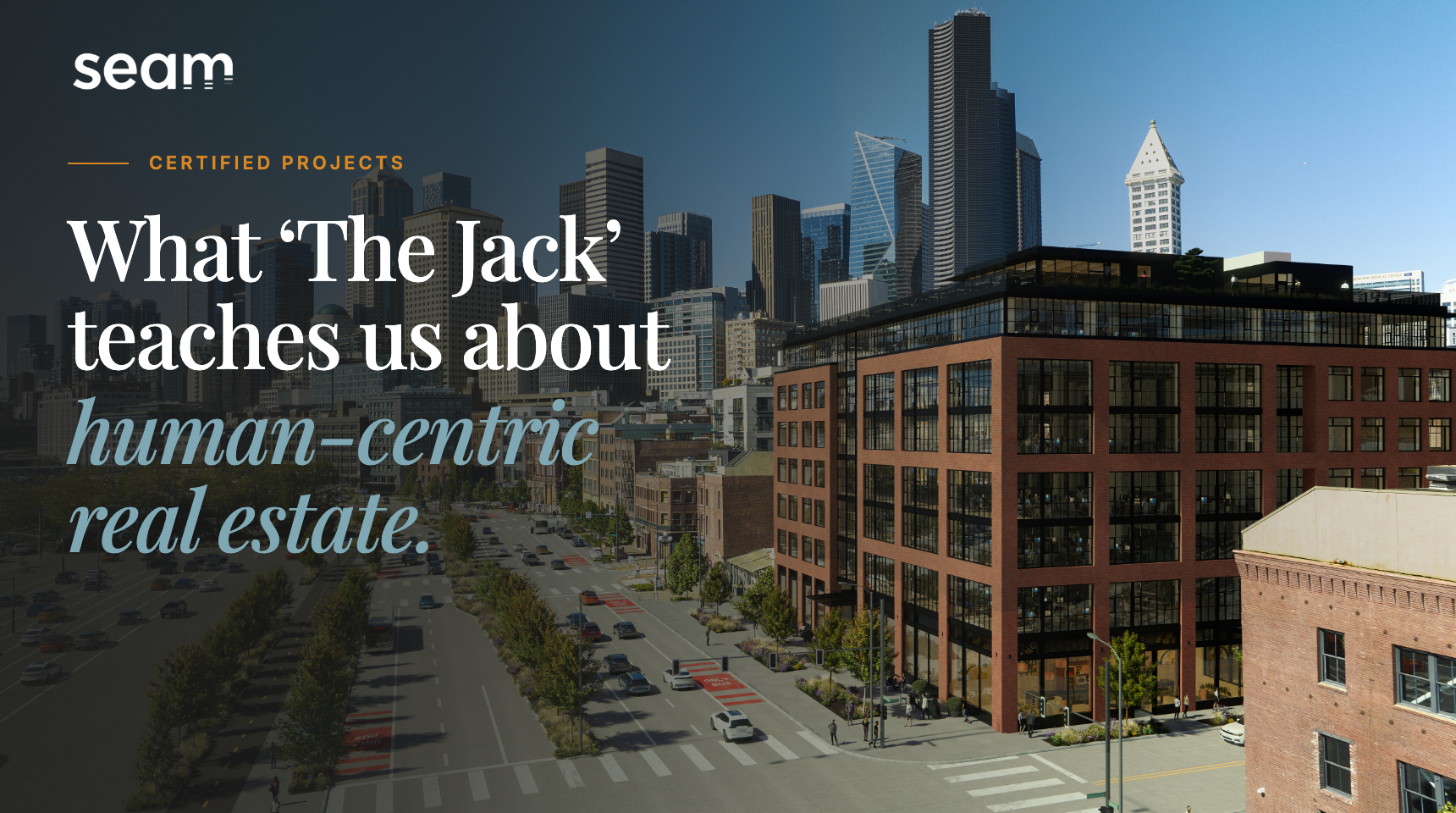
When Urban Visions set out to certify The Jack in Seattle's Pioneer Square, there was no SEAM playbook. They helped us write one, and the lessons from that process are worth sharing with every developer who is serious about the people their buildings affect.
The Jack is a mixed-use building in one of Seattle's most storied neighborhoods. For Urban Visions, SEAM Certification wasn't about collecting a credential. It was about doing the work, genuinely, and being willing to let that work be measured.
Here's what we learned together.
Start with the people, not the building
A core premise of the SEAM process was helping Urban Visions understand who was actually affected by this project. More than just future tenants or the immediate block, they needed the full picture of people whose lives intersected with The Jack: residents, workers, neighboring businesses, and the broader Pioneer Square community, in addition to the tenants who would occupy the building.
SEAM Certification's Impacted Party Engagement process created the structure for that analysis. More than 1,000 community voices were documented, not as public comment on a finished plan, but as input that shaped the project while it could still be shaped. That's a meaningful distinction. All too often, community engagement in real estate happens after the design is locked and with little ability to make meaningful adjustments.
What certification actually required
The Jack received Bronze Operations + Maintenance certification, the first project in the world to earn that designation with SEAM.
Achieving it meant actively working through four pillars of equity: Social Impact, Social Responsibility, Social Justice, and Social Accountability.
In practice, that resulted in documented community engagement and resulting impact on decision-making, new inclusive design features, neighborhood safety investments, and operational policies shaped by what the community said they actually needed.
One of the more surprising outcomes was what happened in the contracting process. Every contractor incorporated the human rights requirements into their contracts without pushback. That's not something we take for granted. It means the social impact commitments Urban Visions made didn't stop at the owner level. They traveled down the supply chain and into the working conditions of the people who built and operate the building. That's what extending equity into a project actually looks like.
And the SEAM framework is meant to build on itself. Each certification cycle creates a baseline of data and documentation that makes the next round more informed and more impactful. Urban Visions now has that foundation.
The lesson worth taking
The Jack has the potential to serve up to 459 building occupants. That's a lot of people whose daily experience — the building's design, its operations, its relationship to the surrounding neighborhood — gets shaped by decisions made long before they walk through the door.
SEAM Certification aims to give developers a structured way to make those decisions with an underpinning of best-in-class research, so the decisions they make are grounded in something that creates real impact.
The result is a project that aims to perform better for the business and help create genuine value for the people affected by it.